
Services
Six areas of studio work for live television, from equipment integration and camera rigs to acoustics, lighting, workflow support and written technical audits.
Six services for live studios
Studio equipment integration
We specify, install and test vision mixers, routers, monitoring and intercom so the whole gallery behaves as one system. Callum documents every signal path before handover, so your crew knows what is connected to what.
Camera setup and operation
We position cameras, fit robotic and pedestal rigs, and brief your operators before going live. The aim is steady, well-framed coverage that holds up through a long programme, not only in rehearsal.
Acoustic optimisation
Duncan measures how studio and gallery rooms respond, then specifies treatment to control echo, background noise and speech clarity. Treatment is chosen for the room as it stands, not from a generic panel list.
Lighting design and rigging
We plan key, fill and background lighting with LED fixtures, grids and dimming control for news and interview sets. Amy draws the rig around your cameras, your presenters and the height of your ceiling.
Live production workflow support
We help plan rundowns, support rehearsals and write fault-finding procedures, so live programmes run to time. When something fails on air, your team has a clear order of checks to follow.
Technical audits
A written review of an existing studio covering cabling, power, signal paths and risks. You receive a prioritised action list, so you can decide what to fix first and what can wait.
How we work
From first enquiry to a studio that runs
Every project starts with a conversation about your programmes and your room. We then move through survey, written proposal, installation and handover in a fixed order. Each step ends with something you can read, check and approve before the next begins.
Enquiry and first conversation
You contact us through the contact page with a short description of the studio, the programmes you broadcast and what is not working. Fiona replies to arrange a call and a visit, so we understand the work before proposing anything.
What you leave with
A shared list of aims and constraints for the studio
Site survey
We visit the studio and gallery to look at cabling, power, room acoustics, lighting positions and how your crew actually works on a live day. Notes and measurements are taken on site.
What you leave with
Survey notes with measurements and observations
Written quotation
We set out the work in writing: what is included, what is not, which equipment is needed and what could change the cost. Nothing proceeds until you have read it and confirmed in writing.
What you leave with
A written quotation you can accept, amend or decline
Installation and testing
The work is carried out around your broadcast schedule where possible. Signal paths, lighting and audio are tested as a whole, and rehearsals are run with your operators before anything goes on air.
What you leave with
A tested system and a rehearsal completed with your crew
Handover and documentation
Callum writes the handover documents: signal flow diagrams, patch lists and fault-finding steps. Your team is walked through them in the studio, and you invoice is issued for payment by bank transfer.
What you leave with
Handover documents and an invoice for the agreed work
What helps us plan your studio properly
A little preparation on your side shortens the survey and makes the quotation more accurate. None of it needs to be perfect; tell us what you have and we will work out the rest.
Floor plan or sketch
A rough drawing of the studio and gallery, with dimensions if you have them, lets us think about camera and lighting positions before we visit.
List of current equipment
Tell us what mixers, cameras, routers and monitors you already own. We will say honestly what can stay and what should be replaced.
Your broadcast schedule
Knowing when you are live tells us when the studio is free for installation, testing and rehearsal without disturbing your programmes.
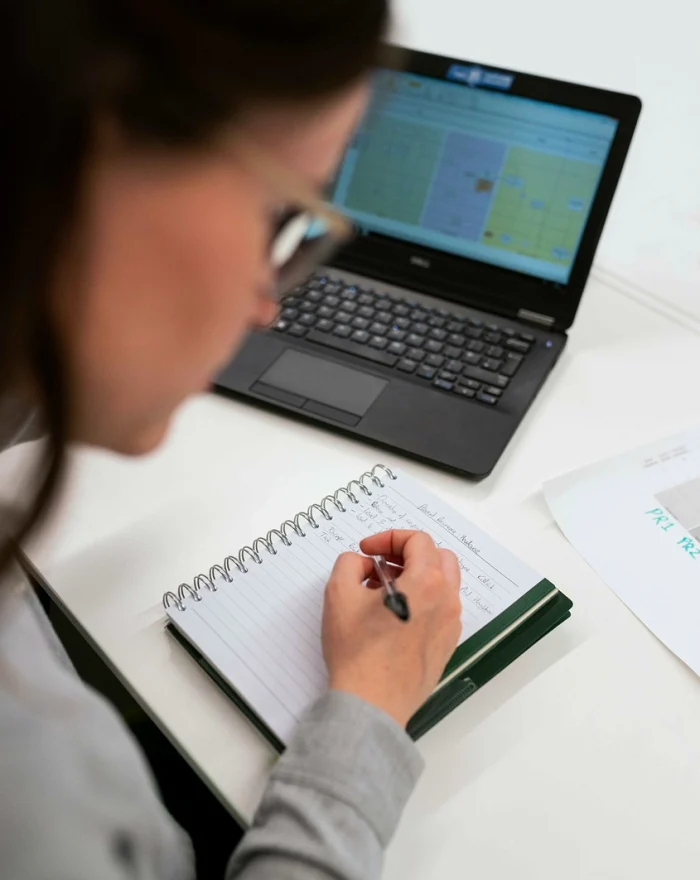
Who operates the studio
Tell us how many operators you have and how experienced they are, so the briefing and documentation suit the people using the system.
Known faults
Echo on the presenter microphone, flicker on camera, an intercom that drops out: describe the problems you hear and see and we will look for causes.
Budget and timing
If you have a budget range or a launch date, say so at the start. We will tell you plainly what fits and what would have to be phased.
Tell us about your studio
Send an enquiry through the contact page with a few lines about your studio and programmes. Fiona will reply to arrange a call and, where useful, a site visit.
Ask for a quote
- Call us
- 01738 450172
- Write to us
- [email protected]